Three things no one has ever said about me:
You make it look so easy
You are very mysterious
You need to take yourself more seriously
(same here! and of course, thats why I immediately loved this book!
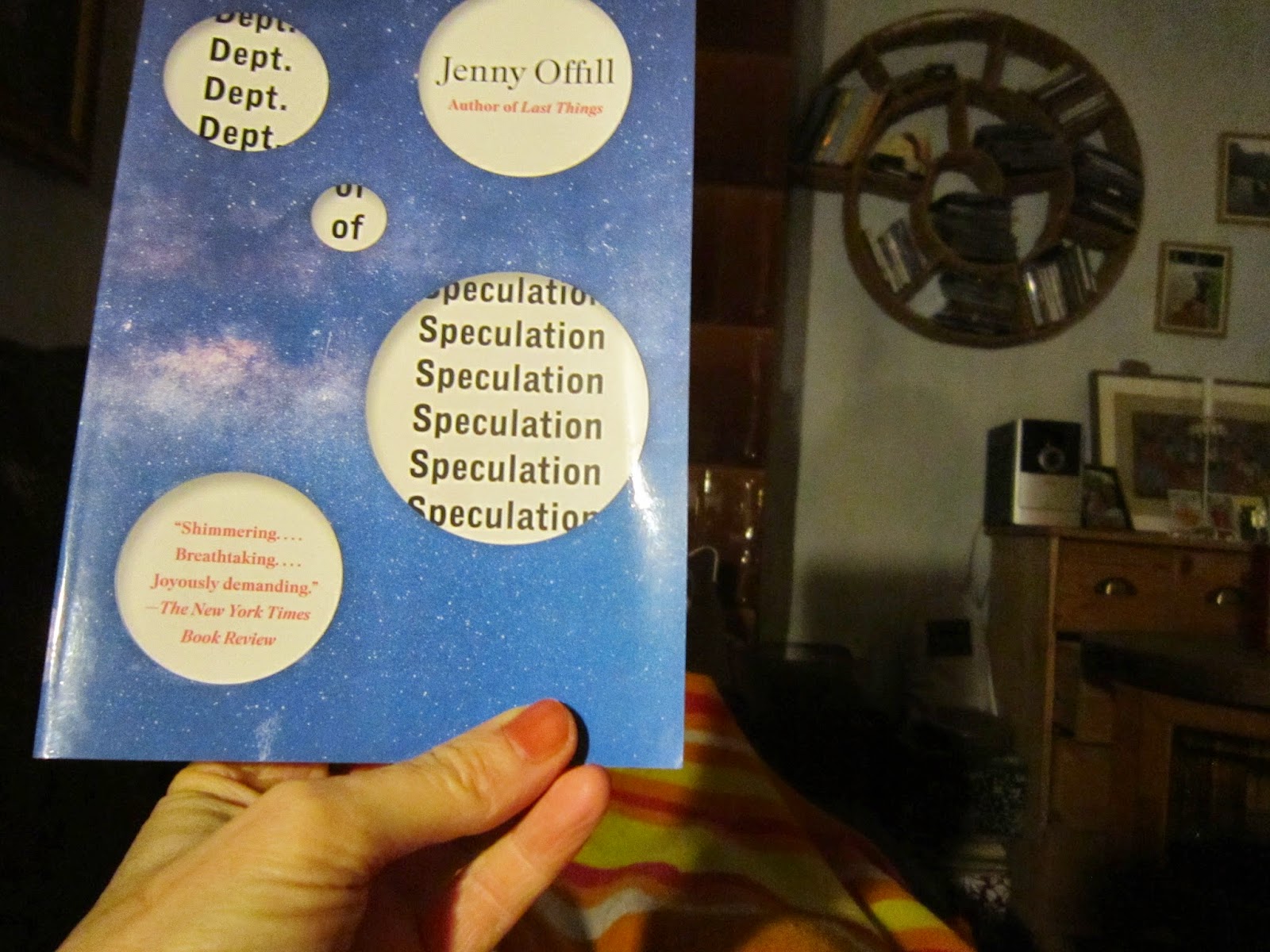 |
| Reading on the sofa: Life equals structure plus activity |
How she meets him, falls in love, marries him, has a daughter - all this despite her initial plan to live as an art monster: "My plan was never to get married. I was going to be an art monster instead. Women almost never become art monsters because art monsters only concern themselves with art, never mundane things. Nabokov didn't even fold his own umbrella. Vera licked his stamps for him."
The whole book is only 177 pages long. You can basically read it in one comfortable sofa corner session. You will need a pen. Because you will find yourself underlining almost every sentence.
So, a book about married with child wanting to write in New York City plus adultery plus moving into the country plus quotes from Einstein, Rilke, Coleridge or the narrators' sister and many others plus lebanese, arabic or buddhist proverbs, as well as many others. Not to forget the parts about the almost astronaut, who wants to write, with her help, a bestseller. So there is a lot about Voyager 1 and Voyager 2 and other such space stuff in it.
Its a treasure box, short yet precise. Once you have read it through you can just keep it on your desk and randomly open it to say, this: "She has wanted to sleep with other people. One or two in particular. But the truth is she has good impulse control. That is why she isn't dead. Also why she became a writer instead of a heroin addict. She thinks before she acts. Or more properly, she thinks instead of acts. A character flaw, not a virtue." I mean, you could just open it first thing in the morning and make one of its quotes your mantra for the day: "I had ideas about myself. Largely untested." Really, you could do MUCH worse then that!
This book is so easy to read, every sentence a pearl you want to meditate on, and you probably should too. "The Buddhists say, there are 121 states of consciousness. Of these, only three involve misery or suffering. Most of us spend our time moving back and forth between these three."
177 pages, 46 chapters, no long sentences, every chapter build from short paragraphs of two to ten lines, seldom longer. It is like a chain of pearls. You read your way along this beautiful chain and are guided through a sad, beautiful, funny and very tender story, told in a nutshell. I said that before. Everybody is saying it. So it must be true. Jenny Offills prose is precise and crystalclear. No chitchat. Nothing superfluous. Polished. Concentrated like the arrow of a Zen archer aiming at the reader.
I am not sure I ever felt closer to a character and her family. It's like, you are in it with them, right in the middle of that black spot the arrow is aiming at, and striking, precisely, most efficiently.
I never knew a story could be told like this, so short, so efficient. Leaves me totally at awe with the author's mastery.
P.S. I almost forgot to mention, that she even mentions yoga in the book (all the time!) Of course I had to just love this book!
P.P.S. You can also get it in german, yes, it is translated!! (Though I am not sure, it is as funny and poignant, but what the hell, give it a try, the cover looks promising. Its called Amt für Mutmaßungen and is published in the Deutsche Verlagsanstalt.
© Susanne Becker
Kommentare
Kommentar veröffentlichen